How Did We Get the Bible? The History, Inspiration, Inerrancy, and Reliability of Scripture
Can we trust the Bible? Who wrote it? How were its books chosen? Has Scripture been changed over time? And why do Protestant Bibles contain 66 books while Catholic Bibles contain 73?
These questions are important for anyone seeking to understand Christianity, the history of the Bible, and the foundation of the Christian faith.
Christians throughout history have confessed that the Bible is more than an ancient collection of religious writings. It is the inspired Word of God, written through human authors under the direction of the Holy Spirit. Scripture is therefore the final authority for Christian faith and practice.
From a historic Reformed Protestant perspective, the Bible is inspired, inerrant, authoritative, sufficient, and providentially preserved by God.
Understanding how we received the Bible strengthens our confidence not only in its historical reliability but also in the God who speaks through it.
1. The History of the Bible: Facts and Background
The Bible is a remarkable collection of writings composed over many centuries, yet it presents a unified account of God’s creation, humanity’s fall into sin, and redemption through Jesus Christ.
Important facts about the Bible
- 66 books: 39 books in the Old Testament and 27 in the New Testament, according to the Protestant canon.
- Approximately 40 human authors: Traditionally associated with prophets, kings, apostles, and other servants of God.
- One divine author: God, who inspired the writings through the Holy Spirit.
- Three original languages: Primarily Hebrew and Greek, with portions written in Aramaic.
- Three continents: The biblical writings arose in geographical settings across Asia, Africa, and Europe, using traditional continental divisions.
- Approximately 1,500 years: The traditional span of biblical composition, depending on the dating of individual books.
- One overarching redemptive message: God’s plan of salvation, fulfilled in Jesus Christ.
The human writers came from different occupations, cultures, and historical circumstances. Moses was a leader of Israel, David was a king, Amos was a shepherd, Luke was traditionally identified as a physician, and Paul was trained in Jewish law.
Yet the Bible’s unity does not depend on the authors having identical backgrounds. Christians recognize a deeper unity rooted in God’s unfolding revelation throughout redemptive history.
Why aren’t the books of the Bible in chronological order?
The books of the Bible are generally organized according to literary categories rather than the precise dates of their composition.
The Old Testament is traditionally organized in Protestant Bibles into:
- The Law (Pentateuch): Genesis through Deuteronomy.
- Historical Books: Joshua through Esther.
- Poetry and Wisdom Literature: Job through Song of Solomon.
- Major Prophets: Isaiah through Daniel.
- Minor Prophets: Hosea through Malachi.
The New Testament follows a similar literary arrangement:
- The Gospels: Matthew, Mark, Luke, and John.
- History: Acts of the Apostles.
- Pauline Epistles: Romans through Philemon.
- General Epistles: Hebrews through Jude.
- Apocalyptic Prophecy: Revelation.
The books were not originally written with the chapter numbers, verse numbers, and modern punctuation found in today’s Bibles. These editorial features were introduced much later to make Scripture easier to read, reference, and study.
They are useful organizational tools, but they are not themselves part of the inspired original text.
2. Why Does the Protestant Bible Have 66 Books?
One of the most common questions about biblical history concerns the number of books in the Bible.
The Protestant Bible contains 66 books, while the Roman Catholic Bible contains 73. Eastern Orthodox traditions may include additional books.
These differences primarily concern the Old Testament canon.
The word canon refers to the recognized collection of books received as Holy Scripture.
The Jewish Tanakh and the Protestant Old Testament
The Jewish Bible, known as the Tanakh, traditionally contains 24 books. The Protestant Old Testament contains 39 books.
Despite this numerical difference, both contain the same underlying collection of Hebrew biblical writings.
The difference is largely a matter of how the books are divided and arranged.
For example:
- The twelve Minor Prophets are counted as one book in the Jewish Tanakh.
- First and Second Samuel are combined into one book.
- First and Second Kings are combined into one book.
- First and Second Chronicles are combined into one book.
- Ezra and Nehemiah are combined into one book.
The Tanakh is organized into three principal divisions:
Torah — The Law
The five books of Moses: Genesis, Exodus, Leviticus, Numbers, and Deuteronomy.
Nevi’im — The Prophets
Includes historical and prophetic writings such as Joshua, Judges, Samuel, Kings, Isaiah, Jeremiah, Ezekiel, and the Twelve Minor Prophets.
Ketuvim — The Writings
Includes Psalms, Proverbs, Job, Daniel, Chronicles, and other writings.
This arrangement is significant because Jesus Himself referred to the Law, the Prophets, and the Psalms when explaining the Scriptures that testified about Him (Luke 24:44).
The Protestant Reformers appealed to the Hebrew Scriptures when distinguishing the Old Testament canon from other ancient Jewish writings.
3. What Is the Apocrypha, and Why Do Protestant Bibles Exclude It?
The Apocrypha is a collection of ancient Jewish writings associated primarily with the centuries surrounding the period between the Old and New Testaments.
The term Apocrypha comes from a Greek word meaning “hidden.” Roman Catholics generally refer to the books they accept as Scripture as the Deuterocanonical Books.
These writings provide valuable historical and cultural information about Judaism during the Second Temple period, including events leading up to the New Testament.
However, Protestant Christians distinguish their historical usefulness from their authority as divinely inspired Scripture.
Which books are included in the Apocrypha?
The Roman Catholic Old Testament includes the following seven deuterocanonical books:
- Tobit
- Judith
- Wisdom of Solomon
- Sirach (Ecclesiasticus)
- Baruch
- First Maccabees
- Second Maccabees
It also contains additional Greek material in Esther and Daniel.
Other collections of the Apocrypha contain additional writings, such as First Esdras, Second Esdras, and the Prayer of Manasseh.
Why do Protestants reject the Apocrypha as Scripture?
Historically, Protestants have offered several arguments for distinguishing these writings from the inspired Old Testament canon.
1. The Hebrew canon
The Protestant Old Testament follows the collection of books preserved in the Jewish Tanakh rather than treating the additional Greek Jewish writings as equally canonical.
2. The distinction between historical writings and inspired Scripture
The Apocrypha contains useful accounts of Jewish history and religious thought. However, historical usefulness does not establish divine inspiration.
Second Maccabees, for example, reflects an awareness of limitations in its historical presentation (2 Maccabees 15:37–39), which Protestant scholars have sometimes contrasted with the claims of biblical prophecy.
3. The testimony of Jesus and the apostles
The New Testament frequently cites the Law, Prophets, and Psalms as authoritative Scripture.
Although the New Testament contains possible allusions and parallels to apocryphal writings, no clear quotation of a deuterocanonical book is expressly introduced as Scripture in the way many quotations from the Hebrew canon are.
This observation is relevant, though it does not independently settle the question of canonicity.
4. The history of the early church
There was disagreement among early Christian writers concerning the status of these books.
Jerome, for example, distinguished the Hebrew canonical writings from other ecclesiastical books. Augustine, on the other hand, supported a broader collection.
The issue was therefore debated long before the Protestant Reformation.
Did the Catholic Church add books to the Bible in 1546?
During the Council of Trent in 1546, the Roman Catholic Church issued a formal dogmatic decree affirming its canon, including the deuterocanonical books.
This occurred during the Counter-Reformation, as the Roman Catholic Church responded to challenges raised by the Protestant Reformers concerning Scripture, tradition, justification, and church authority.
However, it would be historically inaccurate to claim that these books first entered Christian Bibles in 1546. They had been included in many Christian manuscripts and had received recognition in various church councils centuries earlier.
The central disagreement was not whether these books existed or had been read by Christians, but whether they possessed the same divine authority as the Hebrew Scriptures.
From the Reformed perspective, the church does not create Scripture or grant divine authority to a book. Rather, the church recognizes those writings that God has inspired.
This distinction is essential to understanding the Protestant doctrine of the biblical canon.
4. How Did We Get the Bible? Divine Revelation and Inspiration
Christians believe that the Bible originated in God’s special revelation.
God has revealed Himself generally through creation (Psalm 19:1; Romans 1:19–20). However, creation alone does not reveal the gospel of Jesus Christ or communicate everything necessary for salvation.
For this reason, God has also spoken through special revelation.
The Scriptures are the written revelation of God’s truth, culminating in Jesus Christ, the incarnate Word (John 1:1–14; Hebrews 1:1–2).
Did God or man write the Bible?
The biblical answer is both, but not in the same sense.
God is the ultimate author of Scripture, while human beings served as its genuine authors under the supernatural guidance of the Holy Spirit.
Second Timothy 3:16 teaches:
“All Scripture is breathed out by God…”
The Greek word translated “God-breathed” is theopneustos.
This means Scripture is not merely a collection of religious reflections written by men who happened to be inspired by their circumstances.
Rather, Scripture itself originates from God.
Second Peter 1:20–21 further teaches that biblical prophecy did not originate in human will. Instead, men spoke from God as they were carried along by the Holy Spirit.
God did not eliminate the personalities, vocabularies, historical circumstances, or literary styles of the human authors.
Instead, in His sovereignty, He worked through them to accomplish His purpose.
Acts 1:16 illustrates this relationship when Peter explains that the Holy Spirit spoke through David.
The words genuinely belonged to David, yet their ultimate authority belonged to God.
This is the Reformed understanding of divine inspiration: God superintended the writing of Scripture so that its original writings communicated exactly what He intended, without error.
5. What Is Biblical Inerrancy?
Biblical inerrancy is the doctrine that Scripture, in its original writings and rightly interpreted, is without error in everything it affirms.
Because God is truthful and cannot lie (Titus 1:2; Hebrews 6:18), His Word is entirely trustworthy.
Inerrancy is not the claim that every individual manuscript copy or translation is flawless.
Nor does it mean that the Bible always uses modern scientific terminology, exhaustive historical reporting, or strict chronological narration.
Rather, the doctrine concerns what the biblical authors intended to affirm through the literary forms they employed.
Poetry, prophecy, historical narrative, parables, and ordinary observational language must all be interpreted according to their appropriate context.
What does the Bible say about its own authority?
Scripture repeatedly testifies to its divine origin, truthfulness, and authority.
Psalm 12:6 — The purity of God’s Word
The words of the Lord are described as pure, like silver refined in a furnace.
Psalm 119:104–105 — The guidance of God’s Word
God’s precepts provide understanding, and His Word is described as a lamp for our feet and a light for our path.
Proverbs 30:5–6 — The truthfulness of God’s Word
Every word of God proves true. The passage also warns against adding to His words.
Jeremiah 23:29 — The power of God’s Word
God compares His Word to fire and to a hammer capable of breaking rock.
Acts 17:11 — Examining teaching by Scripture
The Bereans are commended for examining the Scriptures daily to determine whether Paul’s teaching was true.
1 Thessalonians 2:13 — Receiving the Word of God
Paul praises believers who received apostolic teaching not merely as human words, but as the Word of God.
2 Timothy 3:16–17 — The inspiration and usefulness of Scripture
All Scripture is God-breathed and profitable for teaching, correction, reproof, and training in righteousness.
2 Peter 3:15–16 — The authority of apostolic writings
Peter places Paul’s letters alongside the other Scriptures, demonstrating recognition of their scriptural status.
Isn’t the Bible’s testimony about itself circular reasoning?
Some object that using the Bible to establish its own divine authority amounts to circular reasoning.
This objection deserves a thoughtful response.
Every ultimate authority must, at some level, be evaluated in light of its own foundational claims. Human reason, empirical observation, and philosophical systems also depend on underlying commitments that cannot be proven by an authority more ultimate than themselves.
The Reformed tradition recognizes Scripture as self-attesting or self-authenticating.
This does not mean that Christians should ignore historical, archaeological, philosophical, or manuscript evidence.
Instead, it means that Scripture’s ultimate authority rests in God Himself, not in the approval of a supposedly higher human authority.
According to the Westminster Confession of Faith (1.5), believers receive full persuasion and assurance of Scripture’s truth and divine authority through the inward work of the Holy Spirit bearing witness by and with the Word.
Historical evidence may confirm the reliability of Scripture, but it does not create Scripture’s authority.
6. Has the Bible Been Preserved Through History?
One of the most important questions in Christian apologetics is whether the Bible we possess today faithfully represents the writings originally given.
The Christian doctrine of preservation teaches that God has providentially preserved His Word for His people throughout history.
Jesus declared in Mark 13:31:
“Heaven and earth will pass away, but my words will not pass away.”
First Peter 1:24–25 similarly teaches that human life fades like grass, but the Word of the Lord endures forever.
Does preservation mean every manuscript is identical?
No.
The original biblical manuscripts, often called the autographs, are not known to survive today.
Instead, we possess handwritten copies and copies of copies, along with ancient translations and quotations preserved in Christian writings.
These manuscript witnesses contain differences known as textual variants.
This reality does not require Christians to abandon confidence in God’s preservation of Scripture.
In fact, having many manuscripts from different centuries and geographical locations allows scholars to compare the evidence and investigate the earliest recoverable wording of the biblical text.
From a Reformed perspective, God’s providential preservation of Scripture is compatible with the historical work of copying, transmitting, comparing, and studying manuscripts.
God has not left His church without His Word.
7. Is the New Testament Historically Reliable?
The New Testament is exceptionally well attested among surviving works of ancient literature.
One of the strongest historical arguments for confidence in the New Testament text concerns the number, geographical diversity, and antiquity of its manuscript witnesses.
How many New Testament manuscripts exist?
Scholars work with approximately 5,800 surviving Greek New Testament manuscripts, depending on cataloging practices and the treatment of manuscript fragments and duplicate entries.
These range from small papyrus fragments containing only a few verses to substantial codices containing large portions of Scripture.
There are also thousands of manuscripts in other ancient languages, including Latin, Syriac, Coptic, and Armenian.
Early Christian writers quoted the New Testament extensively, providing additional evidence for the history of its text.
These different categories of witnesses help scholars study how the New Testament was transmitted through the centuries.
How old are the earliest New Testament manuscripts?
Some of the earliest surviving New Testament papyri are generally dated to the second or third centuries after Christ.
A well-known example is Papyrus 52 (P52), a fragment of John’s Gospel often dated to the second or third century, although its exact date remains debated.
Other important early witnesses include:
- Papyrus 46 (P46): An early collection of Pauline letters, generally dated around the late second or third century.
- Papyrus 66 (P66): An early witness to the Gospel of John.
- Papyrus 75 (P75): An important early manuscript containing portions of Luke and John.
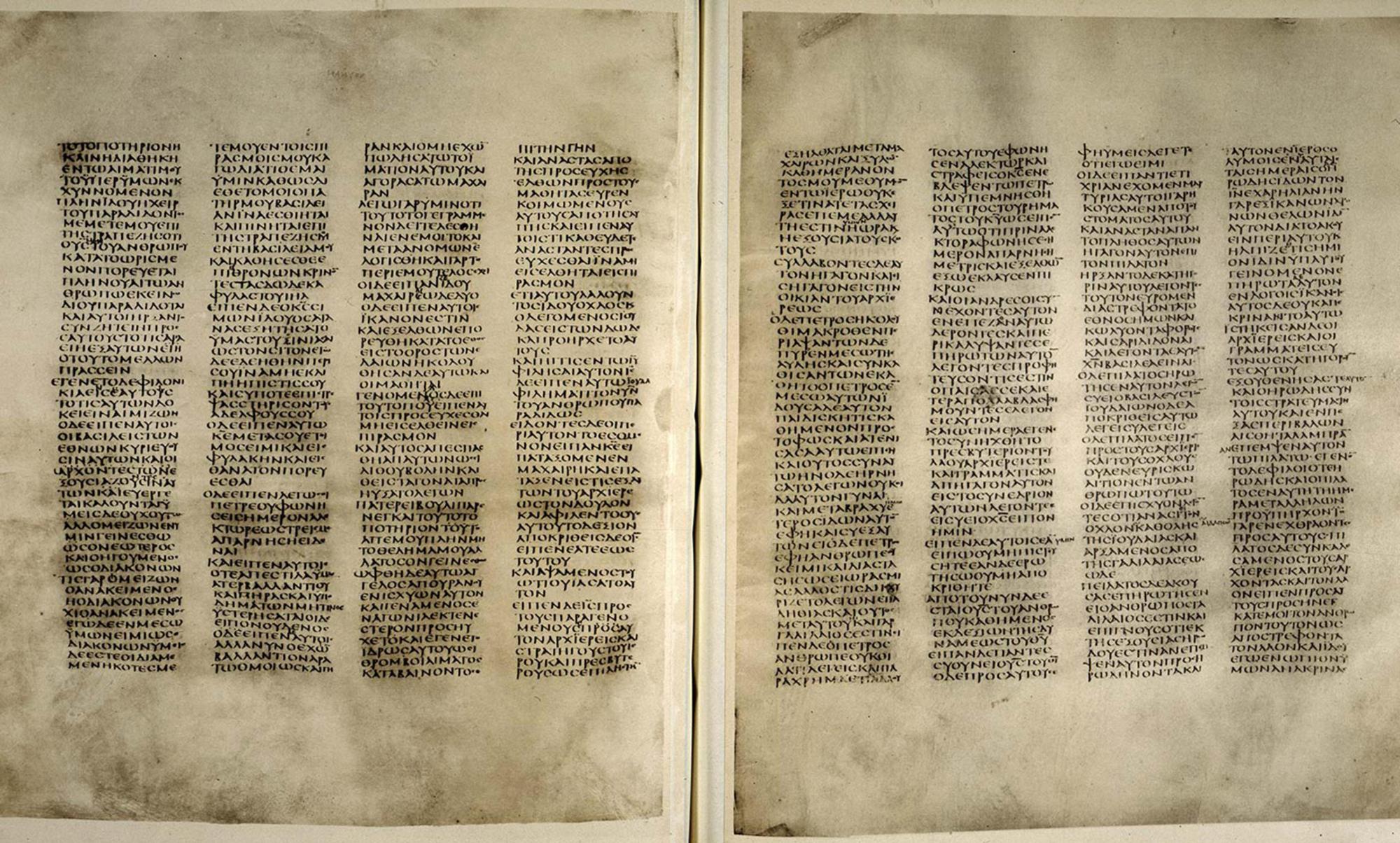
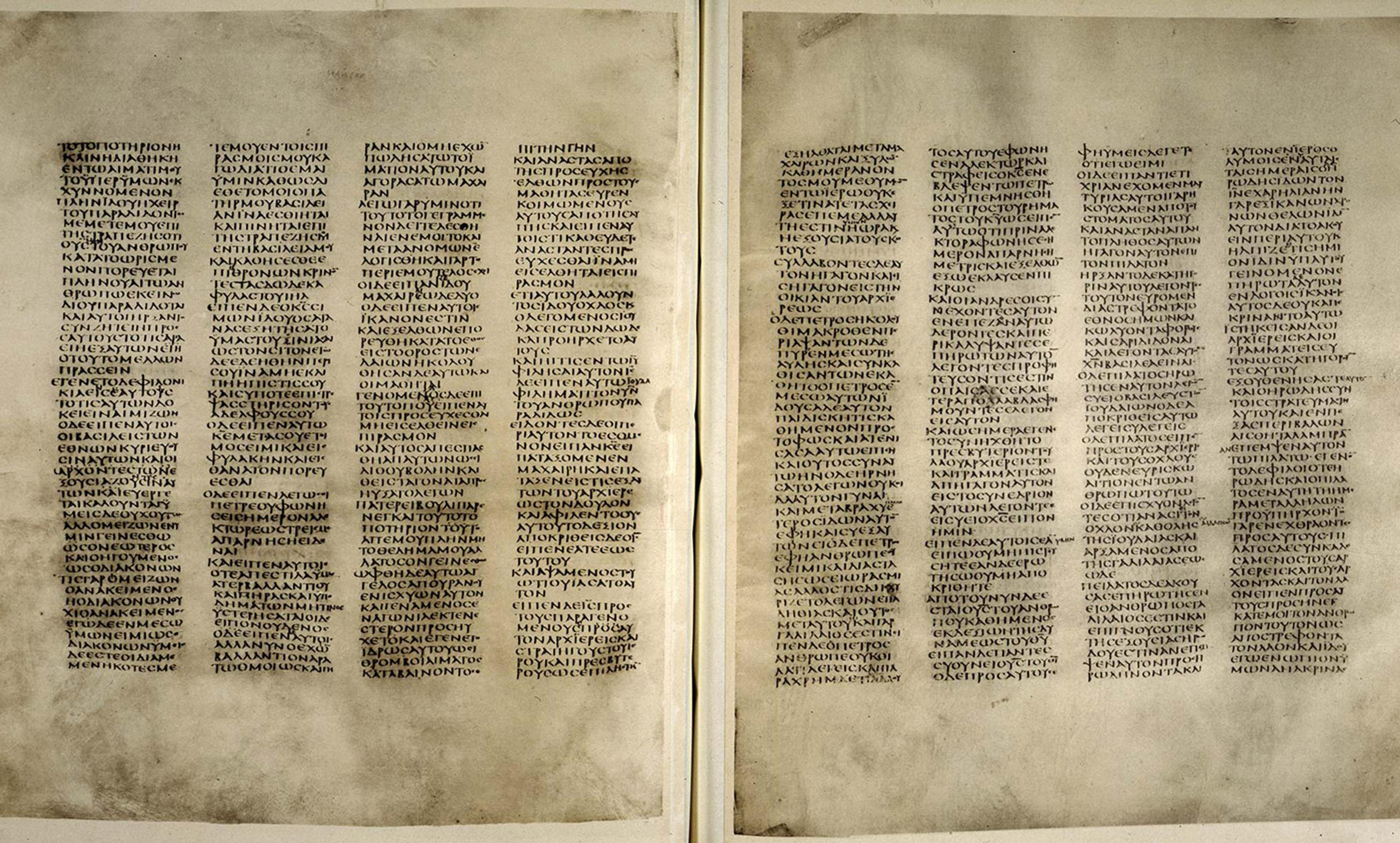
- Codex Vaticanus: A major fourth-century Greek biblical manuscript.
- Codex Sinaiticus: A fourth-century manuscript containing the complete New Testament.
These manuscripts provide valuable evidence about the transmission of Christianity’s foundational writings.
How does the New Testament compare with other ancient literature?
Christian apologists have traditionally compared New Testament manuscript evidence with works by ancient Greek and Roman authors, including Plato, Aristotle, and Julius Caesar.
The main point is that the New Testament survives in a far larger number of Greek manuscript witnesses than most individual works of classical antiquity.
However, comparisons must be made carefully.
Older apologetics materials sometimes claim that only five manuscripts of Aristotle or seven of Plato survive. Such figures are misleading because they depend on which works, languages, and manuscript collections are being counted.
Furthermore, manuscript quantity alone cannot establish that the events described in a document actually happened.
What manuscript evidence can establish is how well the wording of an ancient text can be recovered and studied.
The historical reliability of the events narrated in Scripture involves additional questions of authorship, dating, eyewitness testimony, historical context, and corroborating evidence.
This distinction strengthens Christian apologetics by avoiding claims that overstate what textual evidence can prove.
8. What Are Textual Variants in the Bible?
A textual variant is a difference in wording between manuscript witnesses of a biblical passage.
For example, one manuscript might contain a word that another omits, or two manuscripts might arrange the same words in a different order.
Scholars have identified hundreds of thousands of variant readings across the surviving Greek New Testament manuscript tradition.
Although that number may initially seem troubling, it must be considered in context.
Many differences are minor, while others involve passages that deserve careful historical and textual investigation.
Four general categories of textual variants
1. Spelling differences and obvious copying mistakes
Ancient manuscripts were copied by hand. Copyists occasionally misspelled words, repeated words, omitted letters, or made other mistakes.
Such differences are frequently recognizable and generally do not affect the meaning of the passage.
2. Variants that do not significantly affect translation
Greek allows greater flexibility in word order than English.
Consequently, manuscripts may arrange words differently without materially changing the meaning.
Other examples include differences in articles, conjunctions, and similar grammatical features.
3. Meaningful variants that are unlikely to represent the original text
Some differences would change the meaning of a passage but are poorly supported by the available manuscript evidence.
Scholars evaluate these readings by considering the age, geographical distribution, textual relationships, and internal characteristics of the manuscripts.
A variant can therefore be meaningful without being a serious contender for the original reading.
4. Meaningful and viable variants
These are differences that affect how a passage is understood and for which more than one reading has credible textual support.
They receive particular attention in scholarly textual criticism.
Importantly, the existence of a viable variant does not mean that the entire New Testament text is unreliable.
Rather, such cases demonstrate why careful study of manuscript evidence matters.
Does the Bible contain 400,000 textual errors?
It is misleading to equate the number of textual variants with the number of errors in the Bible.
A textual variant identifies a difference among surviving witnesses. It does not necessarily establish that the original author made an error or that the intended meaning is unrecoverable.
Additionally, the total number depends upon how variants are counted and which manuscripts are included.
The frequently repeated claim that the New Testament text is “99.5% accurate” is also not a universally agreed-upon scholarly measurement. It can create a false impression of mathematical precision.
The more defensible conclusion is that the extensive surviving manuscript evidence allows scholars to reconstruct the New Testament text with a high degree of confidence, although some passages remain disputed.
Example: The Longer Ending of Mark (Mark 16:9–20)
One of the best-known New Testament textual questions concerns Mark 16:9–20.
These verses include accounts of resurrection appearances and statements about signs accompanying believers, including references to handling snakes and drinking poison without harm.
Some of the earliest and most important Greek manuscripts end Mark’s Gospel at Mark 16:8.
Other manuscripts contain the longer ending, and it was widely transmitted in the Christian tradition.
For this reason, many modern Bible translations include the passage with a textual note explaining the manuscript evidence.
This is an example of a meaningful textual variant that deserves careful examination.
The resurrection of Jesus Christ, however, does not depend on the disputed ending of Mark.
Christ’s resurrection is extensively attested elsewhere in the New Testament, including Matthew 28, Luke 24, John 20–21, and 1 Corinthians 15.
Do textual variants undermine essential Christian doctrines?
No central doctrine of historic Christianity rests exclusively upon a disputed New Testament textual reading.
The doctrines of the Trinity, the deity of Christ, salvation by grace through faith, Christ’s atoning death, and His bodily resurrection have substantial biblical support outside passages containing major textual questions.
This does not mean individual variants are unimportant.
Christians should care deeply about the exact wording of Scripture precisely because they believe it is the Word of God.
Textual criticism, properly understood, is not an attempt to undermine Scripture. It is a scholarly discipline devoted to examining the evidence for its transmission.
9. The Sufficiency of Scripture: Is the Bible All We Need?
The Reformed doctrine of the sufficiency of Scripture teaches that the Bible contains everything God intended to reveal as necessary for salvation, faith, and obedience.
Second Timothy 3:15 teaches that the sacred writings are able to make a person wise for salvation through faith in Jesus Christ.
Second Timothy 3:16–17 further explains that Scripture equips the man of God for every good work.
This does not mean the Bible contains every fact about science, mathematics, medicine, history, or human experience.
Nor does it eliminate the legitimate value of teachers, pastors, historical study, or natural revelation.
Instead, Scripture provides the ultimate and sufficient standard by which Christian doctrine and faithful obedience are judged.
What does Sola Scriptura mean?
Sola Scriptura, or “Scripture alone,” was one of the foundational principles recovered and emphasized during the Protestant Reformation.
It teaches that Scripture is the only infallible rule of faith and practice.
Church councils, creeds, confessions, traditions, and teachers may possess genuine authority, but their authority is subordinate to Scripture and must be tested by it.
The church is accountable to the Word of God, not the other way around.
This principle is illustrated in Acts 17:11, where the Bereans examined the Scriptures to determine whether the apostolic message was true.
Sola Scriptura does not mean that every individual Christian must interpret Scripture in isolation or disregard the wisdom of the historic church.
Rather, it recognizes that no human institution possesses authority equal to the inspired Word of God.
10. The Unity and Consistency of the Bible
Despite being written through many human authors over an extended period, the Bible presents a unified story of redemption.
Its major themes develop progressively through the Old and New Testaments.
The consistency of biblical teaching
Several recurring themes demonstrate the theological unity of Scripture.
The character of God
Throughout Scripture, God is revealed as holy, righteous, sovereign, merciful, truthful, and faithful to His promises.
The problem of human sin
From the fall of Adam in Genesis 3 to Paul’s teaching in Romans 3, Scripture consistently presents human sin as the fundamental problem separating mankind from God.
God’s covenant promises
The covenants with Abraham, Israel, and David contribute to the unfolding biblical story, culminating in the promises fulfilled through Jesus Christ.
The person and work of Christ
Jesus taught that the Old Testament Scriptures testified about Him (John 5:39; Luke 24:27).
His life, death, resurrection, and exaltation stand at the center of God’s redemptive plan.
Salvation by grace
Throughout redemptive history, salvation depends upon God’s mercy and grace rather than man’s ability to establish his own righteousness.
The fulfillment of God’s promises
Biblical prophecy and covenant fulfillment connect the Old Testament anticipation of redemption with its realization in Christ.
Progressive revelation does not mean contradiction
Not every biblical passage reveals the same amount of information.
God disclosed His redemptive purposes progressively throughout history, culminating in the revelation of Jesus Christ.
The New Testament provides greater clarity concerning truths foreshadowed in the Old Testament.
The distinction between progressive revelation and contradiction is important.
Although Christians must carefully examine apparent tensions and difficult passages, the Reformed doctrine of Scripture maintains that God does not contradict Himself.
A faithful interpretation seeks to understand every passage according to its original context, literary form, and place within the whole counsel of God.
11. Why Christians Can Trust the Bible
Confidence in Scripture rests upon several interconnected considerations.
First, the Bible claims divine authority and consistently presents itself as the Word of God.
Second, the extensive manuscript tradition provides substantial historical evidence for the transmission of its text.
Third, the Bible’s teachings demonstrate remarkable thematic unity across many centuries.
Fourth, the Christian faith is grounded in historical claims concerning the life, death, and resurrection of Jesus Christ.
Finally, Christians recognize that genuine assurance of Scripture’s divine authority comes through the work of the Holy Spirit.
Historical evidence is valuable, and objections deserve serious responses. Yet Christian confidence does not ultimately depend on finding a manuscript, archaeological discovery, or historical argument capable of removing every possible doubt.
The Christian’s ultimate confidence rests in the God who has spoken.
As Isaiah 40:8 teaches:
“The grass withers, the flower fades, but the word of our God will stand forever.”
12. Frequently Asked Questions About the Bible
Who wrote the Bible?
The Bible was written through approximately 40 traditionally identified human authors over many centuries. Christians believe God is its ultimate author because the Holy Spirit superintended the writing of Scripture.
How many books are in the Bible?
The Protestant Bible contains 66 books: 39 in the Old Testament and 27 in the New Testament. The Roman Catholic Bible contains 73 books, while Eastern Orthodox canons vary.
What languages was the Bible originally written in?
The Old Testament was written primarily in Hebrew, with portions in Aramaic. The New Testament was written in Koine Greek.
How long did it take to write the Bible?
Traditional Christian estimates place the composition of Scripture across approximately 1,500 years, although the precise duration depends on the dating of individual biblical books.
Was the Bible changed over time?
The Bible was transmitted through handwritten manuscripts that contain textual differences. However, scholars can compare thousands of manuscript witnesses to investigate the earliest recoverable wording of the biblical writings.
What is biblical inerrancy?
Biblical inerrancy is the doctrine that the original writings of Scripture are without error in everything they affirm when interpreted according to their intended meaning and literary context.
Why are books missing from the Protestant Bible?
Protestants reject the additional deuterocanonical writings as divinely inspired Scripture, following the Hebrew canon of the Old Testament. Catholics and Orthodox Christians recognize broader Old Testament collections.
Did the Council of Trent add books to the Bible?
The Council of Trent formally affirmed the Roman Catholic canon in 1546. The disputed books were already known and used in Christian traditions centuries earlier, but their canonical status remained a point of disagreement.
Are there contradictions in the Bible?
Critics identify passages they regard as contradictory, while Christians who affirm inerrancy maintain that Scripture is internally consistent when its literary, historical, and theological contexts are properly understood. Individual difficulties require careful examination rather than automatic dismissal.
Can we trust the New Testament manuscripts?
The New Testament survives in thousands of Greek manuscripts and many additional ancient translations. This extensive evidence allows textual scholars to examine its transmission and establish the wording of most of its text with strong confidence.
What does it mean that Scripture is sufficient?
The sufficiency of Scripture means that the Bible contains all the divine revelation necessary for salvation and faithful Christian living. It does not mean that every subject of human knowledge is addressed in Scripture.
What is the difference between inspiration, inerrancy, and preservation?
Inspiration concerns Scripture’s divine origin. Inerrancy concerns its truthfulness and freedom from error in the original writings. Preservation concerns God’s providential care for His Word throughout history.
These doctrines are closely related but should not be confused.
Conclusion: The Word of God Endures Forever
The Bible is not merely a collection of ancient religious writings.
It is God’s inspired revelation, communicated through human authors, preserved through centuries of transmission, and given to His people as the authoritative and sufficient rule of faith and life.
The Christian does not need to deny manuscript differences, ignore historical questions, or exaggerate archaeological evidence to defend Scripture.
Instead, Christians can engage these questions with confidence, knowing that truth does not threaten the Word of God.
From Genesis to Revelation, Scripture reveals the holiness of God, the sinfulness of man, and the glory of redemption through Jesus Christ.
The Bible ultimately calls us to something greater than historical curiosity.
It calls us to hear and believe the Word of the living God.
“Sanctify them in the truth; your word is truth.” — John 17:17
Recommended Resources for Further Study
Books
- Explaining Inerrancy: A Commentary — R. C. Sproul.
- Systematic Theology: An Introduction to Biblical Doctrine — Wayne Grudem.
- The Canon of Scripture — F. F. Bruce.
- Canon Revisited: Establishing the Origins and Authority of the New Testament Books — Michael J. Kruger.
- The Text of the New Testament: Its Transmission, Corruption, and Restoration — Bruce M. Metzger and Bart D. Ehrman.
- Scripture Alone: The Evangelical Doctrine — R. C. Sproul.
Online Research
- Center for the Study of New Testament Manuscripts — Manuscript research, preservation, and digital photography.
- Institute for New Testament Textual Research — Academic research concerning Greek New Testament manuscripts.
- Bible.org — Biblical studies, textual criticism, and theological resources.
- Ligonier Ministries — Reformed teaching on the inspiration, authority, and inerrancy of Scripture.
- Westminster Confession of Faith, Chapter 1 — The Reformed confession concerning Holy Scripture.

